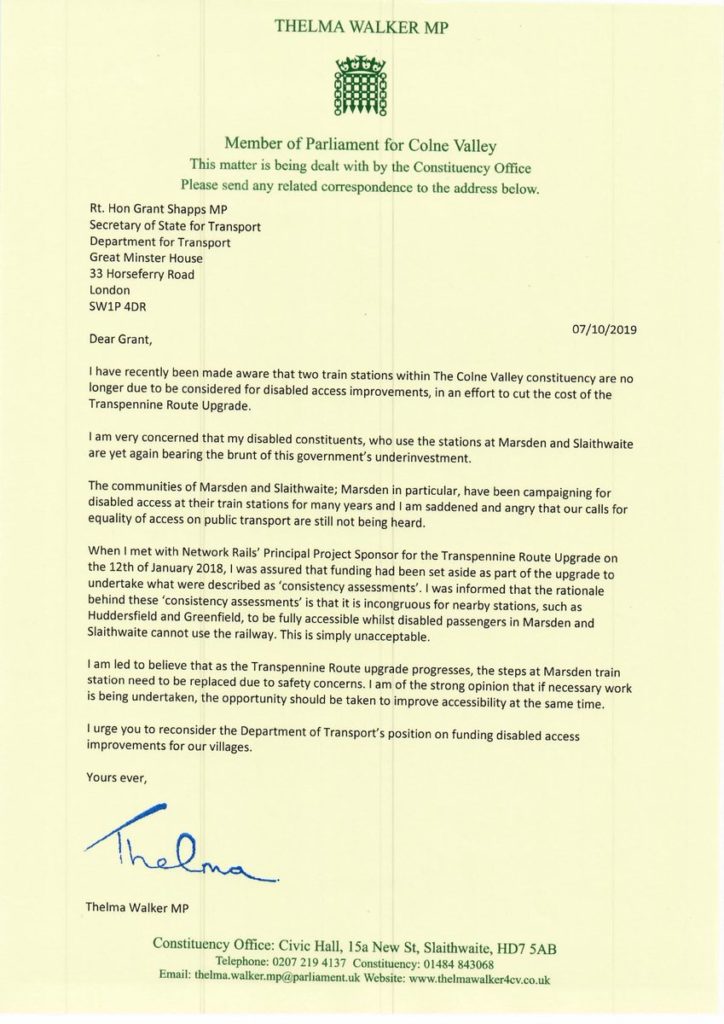
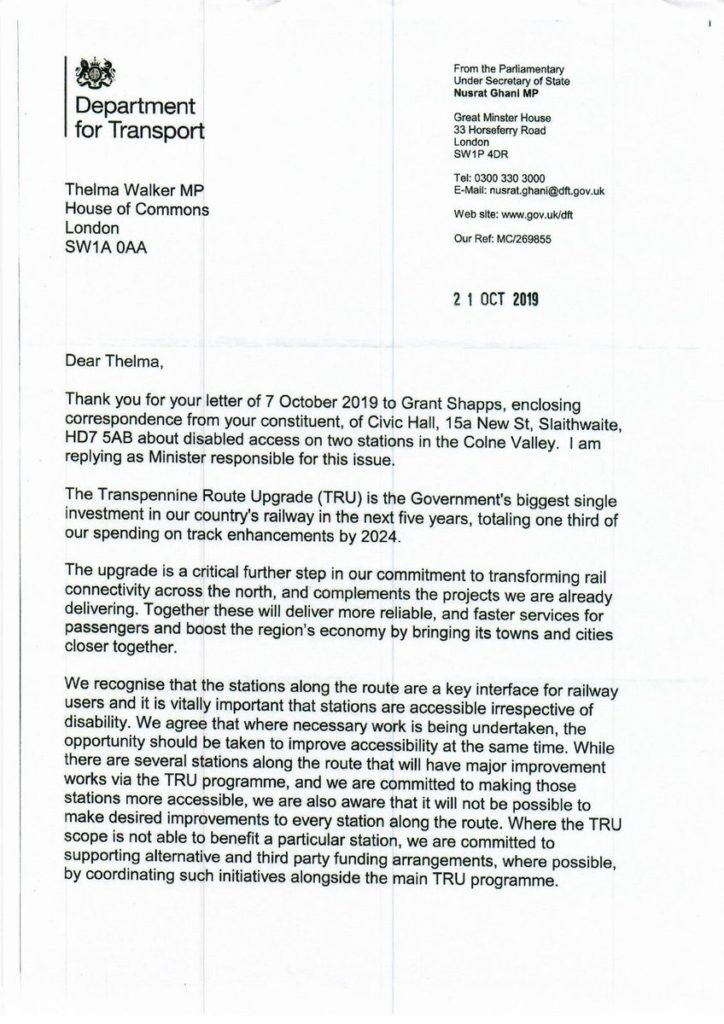
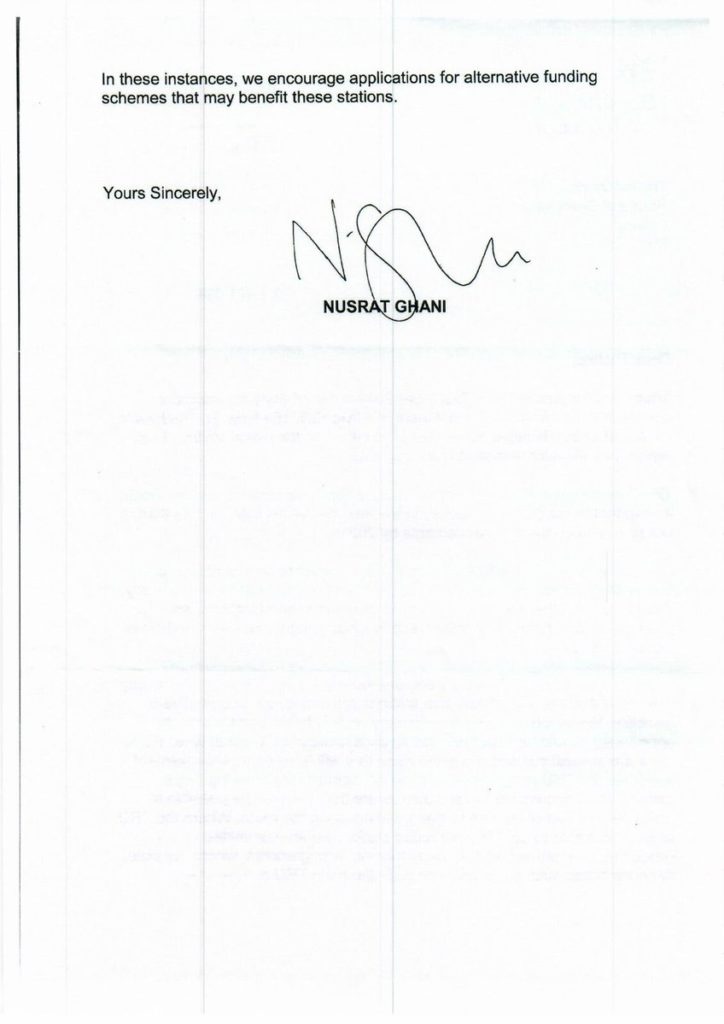
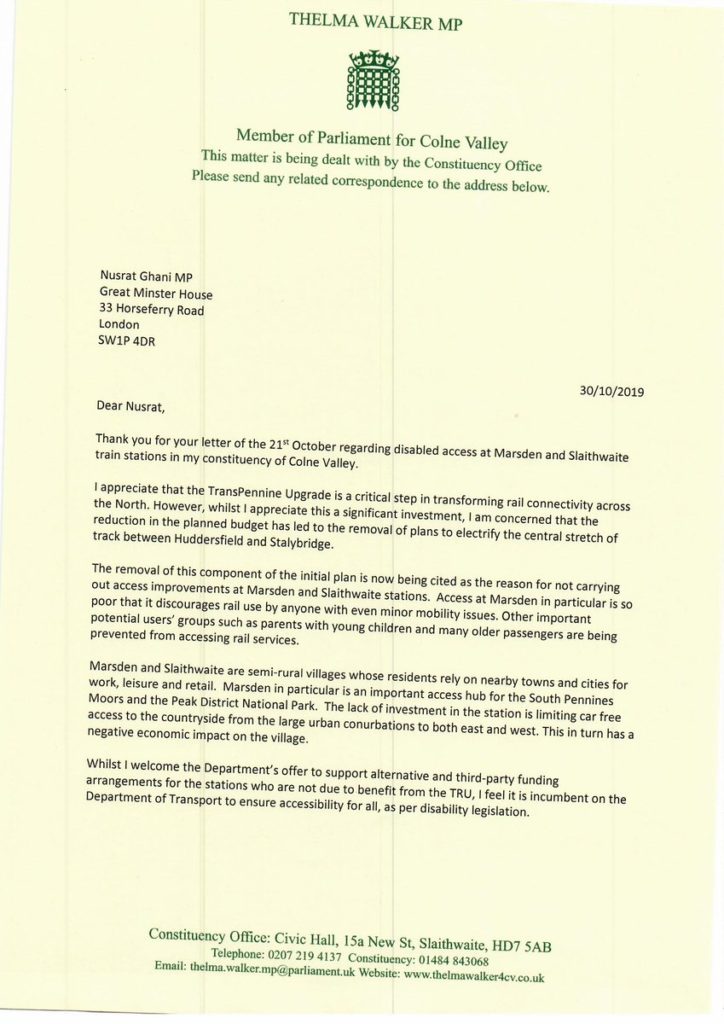
“Why the dream of a functioning northern transport network is now at a critical point”

An interesting take on discussions involving Transport for the North and regional politicians.

All these discussions and the decisions that follow from them are taking place behind closed doors, with us as passengers and citizens being expected just to gratefully accept whatever our feuding Lords and Masters decide we ought to have.

The North can’t be united and work together if passengers’ interests are excluded from the process.

[Opinion in Manchester Evening News by Jennifer Williams, 18th August 2019, follows]

Jen Williams: Why the dream of a functioning northern transport network is now at a critical point

As negotiations ramp up with government over new rail links, last week saw a row break out among northern leaders and officials. But now, more than ever, one united voice from the region is essential

Last weekend the Yorkshire Post ran a great exclusive about what Andy Burnham had been doing the other side of the Pennines.

At the latest meeting of Transport for the North – the semi-independent body that draws up transport strategy on behalf of all northern councils – in Leeds, Greater Manchester’s mayor had refused point blank to support the £39bn high speed rail plan drawn up by officials, which was due to be submitted to government.

This was because the document mysteriously no longer included a demand that the planned HS2 terminus at a rebuilt Piccadilly Station be created underground, a more expensive option, but one leaders here believe is vital to tie it into better future connections to other northern cities. 

His argument was consistent with everything Manchester had been saying for some time, both publicly and privately.

Yet despite having been told the proposal would be in the document, a week before the meeting leaders discovered officials had taken it out.

What followed was a ‘fraught’ discussion (big row) that resulted in TfN being sent away to redo it.

Behind that incident sit some interesting and revealing tensions, between leaders and officials, between different regions and, as ever, between the north and the government.

They also raise important questions about if and how we can actually get the transport network we need here, or whether we are destined to forever beg the Department for Transport for crumbs.

One of those tensions relates to TfN itself. Set up as a pan-northern organisation intended to plan and lobby government for better transport links, increasingly politicians and local officials across the region feel it is not representing the ambition they had envisaged. Some are starting to even question whether there’s any point to it. 

In Greater Manchester there is certainly, as usual, a feeling that there’s no point coming up with plans if they’re not ambitious – as one politician here says regarding Piccadilly, ‘if Westminster wants to criticise our ambition that’s for them to do, not TfN’. We still haven’t had the piecemeal rail improvements we were originally promised, they point out, but that is no reason not to articulate a vision for something truly excellent.

Another senior insider here says TfN did a great job dealing with last year’s northern rail meltdown, adding that the body had been crucial in helping to ‘untangle the chaos’ of what had fundamentally gone wrong – unlike government.

However, in the last year or so, since becoming a statutory body, they said it had become more like a ‘broker’ between the north and the government, as opposed to a voice advocating for ambitious transport upgrades. Leaders find themselves demanding one thing, they said, before finding the plan had slipped back towards the DfT’s position by the time they next met.

 “That ain’t going to work, because in that case why not deal directly with the DfT?”, they add, not the only person I hear make that point.

Another insider on the other side of the Pennines points to a difference in mindset between the northern politicians overseeing things and the civil servants charged with drawing up the plans. While mayors and leaders, for the most part, want to think big and transformative, officials lean towards the traditional Whitehall thinking of going for the cheaper, more conservative option.

One senior politician here agrees with that analysis, adding darkly:

“There needs to be a conversation within TfN about reminding them who they work for.”

TfN would consider that unfair. Doubtless they would point out that whatever case they put to government, it still needs to go through restrictive Treasury processes at a time when finances remain perilously uncertain and Boris Johnson will see little political gain in giving Manchester a better station. Universally, everyone agrees TfN needs to be given a proper budget, with coherent spending decisions made in the north.

But a senior figure elsewhere in the the north says TfN has so far failed to make the case to government about what we need and deserve.

“There’s not many pan-northern organisations that can put pressure on government and TfN have the mandate to be far more demanding,” they argue.

 “Instead they leave it up to individual mayors like Andy Burnham. The problem with that is that under Theresa May, every time Andy or Steve [Rotherham, Liverpool city region mayor] or Dan [Jarvis, Sheffield city region mayor] opened their mouth, Number 10 would retreat because they worried about negative headlines.”

We are now in a new era, of course, and one in which advisers to Boris Johnson are eyeing up an election.

At his speech in Manchester a few weeks ago the new PM committed only to the Manchester to Leeds part of the ‘Northern Powerhouse Rail’ plan, envisaged by leaders here as an entire network. In fairness, I’m told DfT officials hadn’t even wanted him to do that, arguing he should just upgrade the existing line. “You’d have to shut the main line from Manchester to Leeds for about five years if you did that,” points out one transport insider, neatly highlighting what the region is up against. Even so, Boris Johnson’s promise is still actually less than what George Osborne had pledged in 2014.

“The evidence is clearly there that they are not delivering,” says one senior Merseyside figure of both the government and TfN’s approach to the state of the transport network. There was no mention of Liverpool in the speech.

“You get Boris here announcing Manchester to Leeds, a regurgitation five years after George Osborne first mentioned it. I rest my case.”

Meanwhile Tees Valley’s Tory mayor Ben Houchen caused further ructions at the last TfN meeting. Some have detected the hand of government in his comments to fellow leaders, asking why the rest of the north should support Manchester in arguing for a more expensive station.

“This is what TfN has been good at avoiding,” says one senior politician here, “which is picking off one bit of the north against another.” There is a suspicion government wants to start trimming back HS2 and is pitting areas against each other as a result, undermining that northern voice.

The same goes for fun and games around the Northern Powerhouse in general. Many senior figures report speculation that minister Jake Berry wants to set up a statutory body to oversee that, too – chipping away at the growing autonomy and advocacy northern leaders have crafted, by instead putting government in the driving seat.

So northern unity can still be a fragile unity.

Yet it remains, agrees everyone I speak to, essential to finally upgrading an archaic transport network in an era where most of the time, London still cannot hear us.

That will require the north to continue articulating its case as effectively as possible , including for power over its own transport budget, rather than endlessly going cap in hand to Whitehall, applying for piecemeal bits and bobs.

One thing that struck me when researching this piece was that every single official and senior politician I spoke to, anywhere in the north, made the same points, in the same language. Their analysis is consistent: we are being held back here by Whitehall’s abject failure to recognise our needs, or just how much the whole country – but especially the 16m people living here – could benefit if they just took their heads out of the green book.

These are points you rarely see made on national political programmes or in the comment pages of national newspapers, unless you make some serious impact.

Any hopes of doing that, of truly upgrading our hopeless transport network, are at a ‘critical juncture’, says one Greater Manchester figure, and represent a ‘crunch moment’ for TfN. If northern voices allow themselves to be undermined, tearing lumps out of northern officials at the same time, ‘the north will make a big mistake’, they suggest.

“But which government, of any colour, can ignore the whole of the north at this juncture, if we’re united?” they pose. “We have got to the business end of some of these transport schemes and compromises and trade-offs are probably going to be required. That gets a bit messy. But let’s not let that messiness break the whole.”

The unity is there. In reality, everyone here is on the same page. The question is whether we can carry on shouting loud enough for government to read it.   

https://www.manchestereveningnews.co.uk/news/greater-manchester-news/jen-williams-dream-functioning-northern-16775581

Posted in TfN | Tagged | Leave a comment

Guardian Interview with Network Rail Chief Executive Andrew Haines

A lengthy interview with Andrew Haines, Chief Executive of Network Rail, in The Guardian.

Interesting his choice of example where there ought to be consultation with passenger groups.

Part of his prescription for change is simply to consult more; for example, on the biggest scheme that Network Rail will be tasked with in this period, the TransPennine upgrade. Haines says passenger groups should be clearly informed about the years of closures and disruption it will entail on the line between Manchester and Leeds, and given a choice: “Do we want to get the pain over and done with, very intense pain, or prolong it?”

We have been asking everyone in the railway industry, up to and including the erstwhile Secretary of State in person, what the Transpennine Route Upgrade will involve and what outcomes it will deliver. No-one is prepared to answer what ought to be simple questions. If they are being especially communicative they will say that everyone is sworn to secrecy under pain of death. More often they avoid eye contact and change the subject.

The nearest Network Rail have got to any consultation with the communities most affected by TRU is a letter from their NE Regional Director which was leaked to several media outlets in Yorkshire (almost certainly leaked to gauge reaction) https://www.smart-rail.co.uk/?p=1780, followed by a year of silence.

 In our view, leaking documents to gauge public reaction is not a proper form of consultation. Since then, nothing.

If Mr Haines is serious about passenger consultation, then the answer is simple. Instruct his managers at regional level to start communicating with passengers’ groups such as ourselves, and start answering the simple and straightforward questions.

[Article from The Guardian, 18th August 2019, follows.]

Network Rail’s Andrew Haines: ‘We’ve stopped the rot a bit’

A year into the job, chief executive is making cultural changes centred on listening to passengers

[from The Guardian, 18 August 2019]

Call this a crisis? There may be outrage at ever-rising fares on a railway system beset by problems but the last time Andrew Haines, who has just marked his first anniversary as chief executive of Network Rail, took on a fresh job, he made front pages as “the man who closed Britain”.

His tenure at the Civil Aviation Authority was marked early on by the ash cloud crisis that shut down UK airspace. Haines can still fluently reel off the name of the Icelandic volcano, Eyjafjallajökull, whose eruption stopped aeroplanes flying over the UK for six days in 2010, briefly causing the kind of panic about essential imports that was novel before talk of a no-deal Brexit.Haines now occupies a pivotal role in a sector gripped by stasis of a different kind. He took charge of Network Rail, which manages the railway’s track and infrastructure, at the tail end of a five-year budget term during which its free spending was abruptly reined in, and further projects put on ice.

The deaths of two rail workers in south Wales – “a stark reminder of how, despite big strides in safety, the job is far from done”, Haines told staff – has put the safety record of Network Rail under fresh scrutiny, and other failings into perspective. Passengers have at least been kept largely safe in the UK, with more than a decade since a fatal train crash.But much rail investment of the last few years appears to have backfired, Haines suggests.

“What passengers want more than anything else is a punctual, reliable train service, and yet it’s been in decline for the last seven successive years. We’ve turned it round in the last eight months and stopped the rot a bit, but we’ve a long way to go,” he says.

The trouble caused by July’s heatwave, electrical line failures and most recently the National Grid power outages are “painful reminders”, as Haines puts it. The nadir for rail was the disastrous introduction of a revised timetable in May 2018, for which Network Rail admitted to some blame, though Chris Grayling, then transport secretary, admitted to none. It did, however, prompt Grayling to commission an all-encompassing industry review. Figures across the industry have clamoured to affirm the need for change and Grayling’s successor, Grant Shapps, has promised to respect the recommendations of the inquiry chairman, Keith Williams.

It would be a dereliction of duty for me to sit back pending someone else’s view

Haines, though, isn’t waiting. In June he launched plans to transform Network Rail from “a big, slow, bureaucratic company” into devolved, regional units where local managers have been told to listen to their customers and act as they see fit.

Suggestions that he is pre-empting the inquiry’s recommendations get short shrift.

“How much of your life savings would you bank on Keith Williams’ review being implemented in a hurry?” Haines asks.“It would be a dereliction of duty for me to sit back pending someone else’s view. It’s everything I’ve criticised my industry colleagues for, waiting around for other people to solve problems.”

Haines, whose reorganisation of the CAA was bitterly opposed by some staff, insists that the rail shake-up will not affect frontline work.

Restructuring, he says, “is often code for cutbacks. But it is absolutely not in this case”.

Haines credits a plain-speaking approach to his upbringing in Merthyr Tydfil, where his mother and some family still live, and a graduate rail trainee job working in the left luggage office in London’s Victoria station. Returning after a decade to the railway industry where he spent the first 24 years of his career, Haines makes pithy observations about its failings.

“We’ve become really introspective,” he says. “We’ve lost sight of why we exist.”

Plans such as the rebuilding of stations and the introduction of new timetables have been implemented without sufficient concern for passengers, he adds.

“In any normal business you wouldn’t even have to think about it – if you don’t look after your customers, they go somewhere else.”

Part of his prescription for change is simply to consult more; for example, on the biggest scheme that Network Rail will be tasked with in this period, the TransPennine upgrade. Haines says passenger groups should be clearly informed about the years of closures and disruption it will entail on the line between Manchester and Leeds, and given a choice:

“Do we want to get the pain over and done with, very intense pain, or prolong it?”

That cultural change in decision-making is crucial, he says:

“On a corny level, it’s having an empty chair in every meeting and thinking what would a passenger say if they were here; how would they want to be treated.”

However, rail does need structural reform, too, he says. He refuses to spell out a prescription for Williams:

“The rest of the industry might automatically disagree if it thought Network Rail was peddling an answer.”

A structure saying the secretary of state should be accountable for operational decisions on the railway is barking mad

But, he says, it needs to be simpler, less contractual. The industry is still run on rules drawn up in 1994, pre-privatisation.

“They were only ever meant to be transient. If you’d said to the people that designed the structures and contracts that they’d still be in place 25 years on, they’d have laughed at you.”

The fragmented railway they drew up lacks “clarity of accountability”, Haines says, with only the government notionally answerable for the whole system.

“Do we really want a politician accountable for the timetables? Don’t we need some competence?

“A structure that says the secretary of state should be accountable for operational decisions on the railway is barking mad.”

Sanity may be some way off, with long-term train operators withdrawing from rail, and franchise competitions alternately scrapped or awarded to firms teetering on the brink. Even on the vexed issue of rail fares – confirmed last week to be about to rise by 2.8% in January – a desire for reform has not led to industry proposals being enacted, Haines says:

“We’re all circling around, but no one really has to get a grip of it. And it contaminates people’s view of the railway.”

Link to article is
https://www.theguardian.com/business/2019/aug/18/network-rail-andrew-haines-stop-the-rot-passengers

Posted in Transpennine Route Upgrade, Uncategorized | Tagged | Leave a comment

“Link hike in rail fares to reliability or strip North’s failing train operators of franchises” – The Yorkshire Post says

[YP comment, Wednesday 14 August 2019]

Today’s inflation announcement will inevitably mean another kick in the teeth for long-suffering rail passengers. It will be used to calculate next January’s annual fare rises and commuters now face an increase in the region of 2.8 per cent – the equivalent of just over £100 a year.

Yet, while the Government and rail industry will say that this is a small price to pay in order to finance improvements to the network and fund new trains, this view who will not be universally shared by the travelling public who continue – in too many instances – to be treated with contempt.

And, in this respect, this represents an opportunity for Grant Shapps, the new Transport Secretary, to start to win back some of the trust that was lost by his inept predecessor Chris Grayling.

He should be warning each operator – including the under-performing Northern and TransPennine Express outfits – that fare increases must be matched by commensurate improvements to reliability or the worst offenders will be stripped of their franchises.

Mr Shapps, whose Welywn Hatfield constituency is served by the East Coast Main Line, should also be announcing measures to make it easier for passengers to obtain financial redress when services are late.

Yet, while this back-to-basics approach will provide some relief for all those commuters having to pay even more for the privilege of standing on overcrowded rush-hour services, including those ubiquitous Pacer trains still in service here, it will be a start and begin to show that the Government is – belatedly – on the side of passengers.

https://www.yorkshirepost.co.uk/news/opinion/columnists/link-hike-in-rail-fares-to-reliability-or-strip-north-s-failing-train-operators-of-franchises-the-yorkshire-post-says-1-9933394

Posted in fares | Tagged | Leave a comment

“Tensions rise at northern leaders’ transport meeting as Greater Manchester mayor refuses to back plan for high speed rail station”

“Exclusive: Greater Manchester mayor’s bid for £6bn underground station could delay arrival of high speed rail in the North”

[from the Yorkshire Post, Friday 09 August 2019]

The arrival of high speed rail in the North could be delayed because of a dispute over whether a £6bn underground station should be built in Manchester, The Yorkshire Post can reveal.

Greater Manchester metro mayor Andy Burnham has refused to support plans for the £39bn Northern Powerhouse Rail (NPR) scheme connecting the great cities of the North because it includes a surface extension to Piccadilly station to accommodate high speed rail rather than an underground station.

Transport for the North, which is submitting the plans to the government, says a six-platform, 400 metre station above ground that can accommodate NPR and the HS2 high speed line from London would deliver the same benefits as an underground site for the fraction of the cost.

But Mr Burnham is unhappy with the analysis carried out by HS2 and TfN officials and wants more work to be done on the design before a decision is made.

An extract from the confidential document seen by The Yorkshire Post

During a “heated” behind-closed doors meeting of TfN’s board in Leeds he refused to back the decision to allow work to continue on HS2 based on the current design, which would allow the line to connect to NPR at six touch points across the North.

TfN’s chairman John Cridland was forced to withdraw his officers’ recommendations and the matter will be discussed again at the next TfN board meeting in September. Leaders asked TfN to go back and do more work on the project to ensure the North makes the most of the opportunity high speed rail presents.

It is now feared that a lack of agreement may potentially delay the Government’s plans for HS2 to be extended from the Midlands to Leeds and Manchester under Phase 2b of the controversial project, though TfN insists its work is not holding HS2 up.

The current plan is for the legislation to be placed before the Commons in June 2020, based on having a surface station at Piccadilly and an extra HS2 platform at Leeds station instead of a proposed ‘touchpoint’ south of the city where the two high speed lines would intersect.

Any major changes to the Bill would have to come via an ‘additional provision’ (AP), which takes months to prepare and develop.

A confidential TfN document seen by The Yorkshire Post says that a decision later than Summer 2019 “may not leave sufficient time” to develop an AP, potentially meaning the main HS2 Bill can’t be placed by June and jeopardising the promised arrival of the line in the North by 2033.

The report discussed on July 31 says:

“HS2 Ltd have advised that a decision is needed now if they are to prepare an Additional Provision with different designs for the Phase 2b Bill.”

It adds:

“Delays to the approvals and construction of HS2 will have implications for the delivery of Northern Powerhouse Rail. The scale of delay to either scheme is difficult to quantify at this stage.”

A Department for Transport spokesman said last night there was no “immediate” risk of delaying the HS2 bill. He said: “

“We are continuing work with TfN on developing NPR. TfN is considering making a case for changes to existing HS2 designs but we have not yet seen a business case for these.”

The spokesman added:

“The Prime Minister has made clear the Government’s commitment to regional growth and prosperity in the North, including to accelerate plans for Northern Powerhouse Rail between Manchester and Leeds. The Prime Minister has also said he intends to hold a review on HS2.”

https://www.yorkshirepost.co.uk/news/uk/exclusive-greater-manchester-mayor-s-bid-for-6bn-underground-station-could-delay-arrival-of-high-speed-rail-in-the-north-1-9927112

Tensions rise at northern leaders’ transport meeting as Greater Manchester mayor refuses to back plan for high speed rail station

[from the Yorkshire Post, Friday 09 August 2019]

It was a moment of great symbolism as new Prime Minister Boris Johnson used his first major policy speech at Manchester’s Science and Industry Museum to promise a high speed rail link between the city and Leeds.

The pledge two weeks ago was warmly welcomed by many as a sign that plans for the Northern Powerhouse Rail project connecting the great cities of the North had the support of government.

But behind the scenes, wrangling over the details of the scheme and how it will connect with the HS2 route between London and the North has caused tensions between transport officials and northern political leaders.

And the lack of agreement has led to fears that the arrival of high speed rail in the North could potentially be delayed beyond the long-promised date of 2033.

A major bone of contention is how Manchester’s Piccadilly station should be extended to accommodate the 250mph HS2 trains from London and NPR trains to Liverpool, Leeds and the rest of the North.

Analysis by TfN, HS2 Ltd and Network Rail suggests a six platform, 400 metre station could be built above ground – extending the proposed HS2 station at the site by two platforms – for an extra £570m compared to the original HS2-only scheme.

But officials in Greater Manchester, led by Labour metro mayor Andy Burnham, refuse to back this and have argued strongly for an underground station to accommodate Northern Powerhouse Rail.

According to a confidential TfN document seen by The Yorkshire Post, costings by transport officials suggest such a station would need four 400-metre platforms and would cost £6bn. But Mr Burnham’s team have cast doubt on the evidence used for the decision and say more work is needed.

The tensions are understood to have bubbled to the surface during the most recent meeting of Transport for the North’s board, held in Leeds on July 31.

During the public section of the meeting the Greater Manchester mayor welcomed Mr Johnson’s announcement and said northern leaders should not lower their ambitions.

they will set conditions for growth in the North for the rest of this century.”And after the press and public were asked to leave, tensions rose as Mr Burnham challenged the plan to allow HS2 to go ahead with their plans based on a surface station and not his preferred underground option. A source told The Yorkshire Post: “It got a bit heated.”

Time is ticking away on the project, with the Hybrid Bill for Phase 2b of HS2 due to be deposited next June as part of a timescale that would see the high speed route arrive in Yorkshire by 2033.

Any changes to the design – which currently includes a surface station at Piccadilly – would require further legislation, which the TfN document warns would need to get underway this summer to fit the current timescale. The next meeting of the authority’s board is not until September 12.

One northern leader told this newspaper they feared the dispute might delay the arrival of NPR in the North or even put the whole project at risk.

They said:

“If you are going to government and saying we want Northern Powerhouse Rail and there is unnecessary spending, that would provide a massive excuse not to approve it.”

A Treasury source told The Yorkshire Post:

“We have got a relatively sympathetic PM in Government but you need to be practical and realistic. If people are making excessive demands that are not universally supported, that is not going to be helpful. There is a finite amount of money, that is life.”

In a statement, TfN said its work was not holding up HS2 from progressing its plans. A spokeswoman said:

“It was agreed last week by our Board to come back in September following additional work on the various network options. This work is not holding up HS2 from progressing their current plans.

“We submitted a high-level business case to the Government in February for Northern Powerhouse Rail, which included several different options. We’re now working through these in more detail with both our members and the Department for Transport as our co-client.

“However, our northern leaders are clear that we fully expect a commitment from Government to the £39 billion network to connect all of the North’s cities with a fast and reliable railway.”

Henri Murison, Director of the Northern Powerhouse Partnership, which represents civic and business leaders, said:

“The speech made by the Prime Minister last month made clear the need to accelerate progress on Northern Powerhouse Rail – which must be the focus of all those of us involved in the coming months.

“We must ensure the project reflects the settled will of the North’s leaders – including a Bradford City Centre station. The Prime Minister has made clear that the will of the North must be the basis for the scheme he wants to see in the autumn agreed.

“Further work on underground station in Manchester is not delaying HS2 or Northern Powerhouse Rail – and is the right thing to do because there is significant further work being undertaken to find a solution which works for the North, and isn’t one designed and dictated to us by officials from Whitehall.”

Junction south of Leeds would be too disruptive, says TfN

Leaders in West Yorkshire could also be disappointed as the current plan for the design of HS2 does not include a ‘touchpoint’ in Stourton, south of Leeds.

This measure would have allowed HS2 and NPR services approaching from the south to loop round and pass through Leeds station – which is designed with trains coming in from the east and west – rather than terminating in the city or passing through altogether on the way north.

But in its report, written by its NPR director Tim Wood, TfN says creating this junction would lead to “significant disruption in south Leeds and significant impacts upon local employment sites”, with a £800m cost much higher than originally thought.

Officials now say alternative options are available using the proposed HS2 station at Leeds, which would be built south of the existing station, combined with infrastructure work in South Yorkshire which would cost less and “avoid the complex delivery issues at Stourton”.

A spokesman for West Yorkshire Combined Authority, which makes transport decisions for the county, said the benefits of a touchpoint “include the possibility of new routings between the North’s core cities with greater opportunities to release additional capacity and reshape the national network”.

He said:

“We also want to see HS2 services to reach wider markets beyond Leeds, such as Bradford, Huddersfield and, further afield, Hull, which could mean high-speed services arriving in Bradford 10 years ahead of the completion of Northern Powerhouse Rail.

“The benefits could also boost the commercial benefits of HS2’s eastern leg and also provide the potential for new markets such as the North East and the East Midlands as well as supporting more efficient operations through enhanced connectivity.”

Henri Murison of the Northern Powerhouse Partnership said:

“The point of the Stourton junction proposal is to enable trains from the new HS2 line to carry on to Bradford, enabling better connectivity to cities like Sheffield, and ensure the system has resilience.

“Many focused on the case for NPR are open to all ways to achieve the same benefits – but until we see the detail of any alternatives no one should rule it out from further consideration.”

An HS2 Ltd spokeswoman said:

“We continue to work on the detailed design of Phase 2b route between Birmingham and Leeds, and Crewe and Manchester, in line with the projected timescales for the hybrid Bill submission.

“We revised our hybrid Bill submission date to enable more time to work with Transport for the North and explore all potential opportunities to align HS2 and NPR, as we’re determined the North gets the best possible transport system.

“HS2 is essential to Transport for the North’s plans. Together, we will enable faster, more frequent and reliable rail services, making it easier for people and businesses to live, work and trade where they want.

“HS2 will give passengers thousands of extra seats every day, and will move intercity trains off the busy existing rail network, freeing up space to run future NPR services.”

https://www.yorkshirepost.co.uk/news/uk/tensions-rise-at-northern-leaders-transport-meeting-as-greater-manchester-mayor-refuses-to-back-plan-for-high-speed-rail-station-1-9927173

North must show united front over high speed rail – The Yorkshire Post says

High speed rail is essential for our region.

YP COMMENT, Saturday 10 August 2019

HIGH speed rail is absolutely essential for our region if it is to realise its economic potential in the years and decades ahead.

Without it, there is a very real risk that the North will fall yet farther behind the South.

That means any obstacle to either the HS2 line reaching Yorkshire, or Northern Powerhouse Rail transforming links across the Pennines has to be viewed with a great degree of concern, not least because amid uncertain economic conditions there is a possibility of the Government reneging on funding commitments.

So it is very much to be hoped that the dispute over whether a £6bn NPR station in Manchester should be built above or below ground can be resolved both quickly and amicably, as any sign of dissent amongst the North’s leaders sends entirely the wrong message to the Government.

It is more than ever necessary for the great cities of the North to present a united front in their dealings with London, to have settled and fully-formed plans and above all to speak with one voice.

For the Greater Manchester mayor, Andy Burnham, to depart from that by refusing to support the £39bn NPR scheme because he wants a station built underground, and not on the surface, is, to say the least, unhelpful and potentially delays HS2.

This cannot be allowed to happen, especially after the Prime Minister came north for his first engagement outside London and pledged support for a high-speed line between Leeds and Manchester.

The North must keep its focus on the main prize – transformational new transport links that mean companies in Yorkshire and elsewhere can prosper and their staff get to work quickly and efficiently, both of which are desperately needed.

That is what matters, and any disputes must firmly be set aside in order that it is achieved as rapidly as possible.

https://www.yorkshirepost.co.uk/news/opinion/columnists/north-must-show-united-front-over-high-speed-rail-the-yorkshire-post-says-1-9927379

Posted in Uncategorized | Leave a comment